How Seller Financing Works — Mechanism and Legal Protections
Seller financing simplifies the concept: instead of a bank providing the loan, you act as the lender. The buyer pays you monthly principal and interest, and the structure is a common real estate process fully recognized by the IRS.
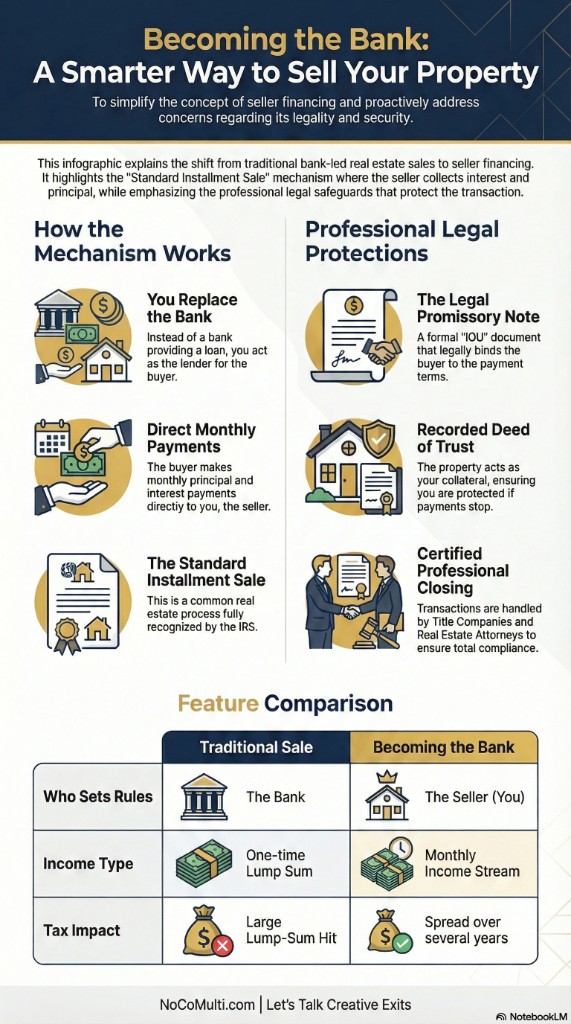
How the Mechanism Works
You replace the bank: instead of a bank providing a loan, you act as the lender for the buyer. The buyer makes monthly principal and interest payments directly to you. This is the standard installment sale — a common real estate process fully recognized by the IRS.
Professional Legal Protections
A formal promissory note legally binds the buyer to the payment terms. The property acts as your collateral via a recorded deed of trust, so you're protected if payments stop. Transactions are handled by title companies and real estate attorneys to ensure total compliance.
Traditional Sale vs. Becoming the Bank
In a traditional sale, the bank sets the rules, you get a one-time lump sum, and the tax impact is a large lump-sum hit. When you become the bank, you set the rules, you get a monthly income stream, and capital gains can be spread over several years — often a significant advantage.
Ready to explore your exit? Let's talk creative terms.